"Yes, I have tricks in my pocket, I have things up my sleeve. But I am the opposite of a stage magician. He gives you illusion. I give you truth in the pleasant disguise of illusion." (Scene 1, Page 1236)
He certainly does not give me illusion. He gives me disappointment and no hope for the underdog. Amanda doesn't get what she wants. Tom doesn't get what he wants. Laura doesn't get what she wants, but she does get what she needs: an improvement in her self-esteem. And that right there, ladies and gentlemen, saved the play. The ending did not exactly entertain me like a magician would, but I was at least happy for Laura in a content kind of way. She was abandoned the only other constant man in her life: her brother, but she also was given confidence by an equally impacting man: Jim. Although I ended this play with anger at Tom for leaving, I also was proud of him for achieving one life goal of his. He got away. He gave me the truth about his life whether I liked it or not, and I am thankful for that.
Monday, February 27, 2012

Memory - I'd rather not think about it.
"There was a Jim O'Connor we both knew in high school - if that is the one Tom is bringing to dinner - you'll have to excuse me, I won't come to the table." (Scene 6, Page 1264)
Some of the most debilitating memories in this play revolve around Laura. I blame her incredibly low self-esteem for this. The memory of her handicap in high school has haunted her for 6 years and prevented her from forming any real relationships in her life that could improve her life. Just the thought of a high school acquaintance coming to dinner causes her to be ill, and she is only coaxed out of this sickness by the good manners and delightful personality of Jim.
The other negative memory surrounding Laura is Tom's memory of her when he leaves. He is trying to change his life, and he is haunted by the guilt of leaving his little sister. The memory of his betrayal towards her grips him at times, and he has to drown out the thought of her with movies and alcohol further proving that the memories surrounding Laura are primarily obstructive of self-improvement.
Some of the most debilitating memories in this play revolve around Laura. I blame her incredibly low self-esteem for this. The memory of her handicap in high school has haunted her for 6 years and prevented her from forming any real relationships in her life that could improve her life. Just the thought of a high school acquaintance coming to dinner causes her to be ill, and she is only coaxed out of this sickness by the good manners and delightful personality of Jim.
The other negative memory surrounding Laura is Tom's memory of her when he leaves. He is trying to change his life, and he is haunted by the guilt of leaving his little sister. The memory of his betrayal towards her grips him at times, and he has to drown out the thought of her with movies and alcohol further proving that the memories surrounding Laura are primarily obstructive of self-improvement.
The Glass Menagerie - walking on egg shells
"Go to the movies, go! Don't think about us, a mother deserted, an unmarried sister who's crippled, and has no job!" (Scene 7, Page 1288)
This is one screwed up family. Amanda is very loving towards her children, but she is also quick-tempered with them. She's been hardened by a lifetime of disappointments. She always dreamed of marrying a man with land and servants, but she ended up marrying into the working class and eventually being abandoned by her husband. And to make matters worse, she still practically fawns over her jerk of a husband and honors him with a giant picture in the middle of their home. Their relationship is quite complex, to say the least. As hard as Amanda tries, Tom is still turning out to be very much like his father, and he doesn't seem to care. The main difference between the two men is that Tom loves his mother and his sister. When he calls Laura crippled, Amanda reprimands him and says that she isn't noticeably crippled. In the quote above, however, tension causes Amanda to eat her own words and call her own daughter crippled in an attempt to stop Tom from leaving.
Tom loves Laura, but not enough to stay. He loves Amanda, but not enough to obey her. He doesn't love himself enough to believe that he could ever do great things. Family complexities at their finest.
This is one screwed up family. Amanda is very loving towards her children, but she is also quick-tempered with them. She's been hardened by a lifetime of disappointments. She always dreamed of marrying a man with land and servants, but she ended up marrying into the working class and eventually being abandoned by her husband. And to make matters worse, she still practically fawns over her jerk of a husband and honors him with a giant picture in the middle of their home. Their relationship is quite complex, to say the least. As hard as Amanda tries, Tom is still turning out to be very much like his father, and he doesn't seem to care. The main difference between the two men is that Tom loves his mother and his sister. When he calls Laura crippled, Amanda reprimands him and says that she isn't noticeably crippled. In the quote above, however, tension causes Amanda to eat her own words and call her own daughter crippled in an attempt to stop Tom from leaving.
Tom loves Laura, but not enough to stay. He loves Amanda, but not enough to obey her. He doesn't love himself enough to believe that he could ever do great things. Family complexities at their finest.
Thursday, February 16, 2012
Seven Brides for Seven Brothers!
"To-morrow is the joyful day, Audrey; to-morrow will we be / married." (V.iii.72)
I grew up loving the musical Seven Brides for Seven Brothers (or as my family calls it: SB4SB) because I was raised watching it. It's pretty much the greatest movie/musical ever. It's the movie I watch when I am home sick and I feel like doing absolutely nothing. Here's a quick synopsis: it is based in 1850 Oregon in the backwoods. A backwoodsman who just happens to be the oldest of 7 boys meets and marries Milly - a city girl who is basically a wonder woman when it comes to housework and farmwork. Also, she's gorgeous and has the voice of an angel sliding down a rainbow. So naturally Adam (the eldest of the boys) is drawn to her instantly in this highly realistic movie. By the end of the movie (after multiple ridiculously amazing song and dance numbers), the other 6 brothers have all found wives and they all get married at the same time. Fun fact: the brothers names are Adam, Benjamin, Caleb, Daniel, Ephraim, Frankincense (call him Frank if you don't want him to beat you up), and Gideon Pontipee. It's a strapping group of Bible-named young men.
Unfortunately, I can't find a youtube clip of the wedding scene, so you'll just have to be satisfied with the best dance scene you have ever seen (the second half of the clip is the best because it is when the brothers who are mostly from a ballet company or a gymnastics team show their true talents):
The marriages in "As You Like It:" Rosiland to Orlando, Celia to Oliver, Audrey to Touchstone, and Phebe to Silvius all occur in Act 5, and they complete the essence of the comedy. Apparently, in a tragedy everyone dies, and in a comedy everyone gets married. What a way to live!
I grew up loving the musical Seven Brides for Seven Brothers (or as my family calls it: SB4SB) because I was raised watching it. It's pretty much the greatest movie/musical ever. It's the movie I watch when I am home sick and I feel like doing absolutely nothing. Here's a quick synopsis: it is based in 1850 Oregon in the backwoods. A backwoodsman who just happens to be the oldest of 7 boys meets and marries Milly - a city girl who is basically a wonder woman when it comes to housework and farmwork. Also, she's gorgeous and has the voice of an angel sliding down a rainbow. So naturally Adam (the eldest of the boys) is drawn to her instantly in this highly realistic movie. By the end of the movie (after multiple ridiculously amazing song and dance numbers), the other 6 brothers have all found wives and they all get married at the same time. Fun fact: the brothers names are Adam, Benjamin, Caleb, Daniel, Ephraim, Frankincense (call him Frank if you don't want him to beat you up), and Gideon Pontipee. It's a strapping group of Bible-named young men.
Unfortunately, I can't find a youtube clip of the wedding scene, so you'll just have to be satisfied with the best dance scene you have ever seen (the second half of the clip is the best because it is when the brothers who are mostly from a ballet company or a gymnastics team show their true talents):
The marriages in "As You Like It:" Rosiland to Orlando, Celia to Oliver, Audrey to Touchstone, and Phebe to Silvius all occur in Act 5, and they complete the essence of the comedy. Apparently, in a tragedy everyone dies, and in a comedy everyone gets married. What a way to live!
So just call on me, brother, when you need a hand....or not
"The other daughter to the banish'd Duke, / And here detain'd by her usurping uncle, / To keep his daughter company; whose loves / Are dearer than the natural bond of sisters." (I.ii.11-12)
....and apparently dearer than the natural bond of brothers. The brothers in this story do not do the Lean On Me lyrics justice. Two sets of brothers are juxtaposed: Oliver and Orlando and Duke Senior and Duke Frederick. And guess what? They're horrible brothers! Nothing like Will Ferrell and John C. Reilly:
(I really wanted to put the "did we just become best friends" scene on here, but they use some explicit terminology so this will have to suffice. If it doesn't play, then that's quite unfortunate for you. Sorry.)
Oliver is older than Orlando. Duke Senior is older than Duke Frederick. However, Duke Frederick does not follow the rules of society; he takes over his brother's position as duke and banishes his brother to the desert. Oliver has a right to his land and an obligation to help his younger brother, but he doesn't. Because he's a little meanie pants. The juxtaposition of these two sets of brothers shows that societal rules are not the only ones to follow; one should also adhere to family obligations. The two mean brothers - Oliver and Frederick - do make up for their annoying qualities throughout most of the play by finally loving their brothers and giving them what is rightfully theirs. However, by that time Orlando is already set to marry Rosalind eventually and on his way to dukedom, so Oliver was a tad late with his generosity. But the show must go on!
....and apparently dearer than the natural bond of brothers. The brothers in this story do not do the Lean On Me lyrics justice. Two sets of brothers are juxtaposed: Oliver and Orlando and Duke Senior and Duke Frederick. And guess what? They're horrible brothers! Nothing like Will Ferrell and John C. Reilly:
(I really wanted to put the "did we just become best friends" scene on here, but they use some explicit terminology so this will have to suffice. If it doesn't play, then that's quite unfortunate for you. Sorry.)
Oliver is older than Orlando. Duke Senior is older than Duke Frederick. However, Duke Frederick does not follow the rules of society; he takes over his brother's position as duke and banishes his brother to the desert. Oliver has a right to his land and an obligation to help his younger brother, but he doesn't. Because he's a little meanie pants. The juxtaposition of these two sets of brothers shows that societal rules are not the only ones to follow; one should also adhere to family obligations. The two mean brothers - Oliver and Frederick - do make up for their annoying qualities throughout most of the play by finally loving their brothers and giving them what is rightfully theirs. However, by that time Orlando is already set to marry Rosalind eventually and on his way to dukedom, so Oliver was a tad late with his generosity. But the show must go on!
That awkward moment when you're not actually a man...
"I had rather hear you chide than this man woo." (III.v.52)
Well, this is awkward. The dramatic irony is practically dripping from the pages of this adorable little book because Phebe is in love with a man who's actually a woman. And to add to the insanity: that man who is actually a woman is in love with Orlando who loves her back but doesn't know it is her so he is pretending to be in love with a man that is actually the woman he loves. (intake of breath) It's all very unfortunate for Phebe because she's in love with a woman. I mean, talk about embarrassing. The audience knows of Rosalind's disguise, as does Celia (who is also in disguise), but the rest of the characters are completely ignorant. So I have to ask: are they just used to really feminine guys in this forest? Because I doubt a duke's daughter looks masculine enough to be a strapping young man. But oh well. Shakespeare was a bit worn out with comedies when he wrote this anyway. This whole situation just reminds me of the scene is She's the Man (I'm sure no one else has alluded to this movie in their blogs yet, Mr. Costello...sarcasm...so you're in for a treat) when Olivia Lennings proclaims to Viola that she is just going to walk up to Sebastian (Viola's brother who she has been impersonating for 1 1/2 weeks) and kiss him. Here's a clip in case you don't get the idea:
As audience members, we're pretty lucky to know that Ganymede is actually Rosalind because I would be extremely confused if I didn't know. Or maybe I would just feel really awkward watching Orlando pretend to love a man.
Well, this is awkward. The dramatic irony is practically dripping from the pages of this adorable little book because Phebe is in love with a man who's actually a woman. And to add to the insanity: that man who is actually a woman is in love with Orlando who loves her back but doesn't know it is her so he is pretending to be in love with a man that is actually the woman he loves. (intake of breath) It's all very unfortunate for Phebe because she's in love with a woman. I mean, talk about embarrassing. The audience knows of Rosalind's disguise, as does Celia (who is also in disguise), but the rest of the characters are completely ignorant. So I have to ask: are they just used to really feminine guys in this forest? Because I doubt a duke's daughter looks masculine enough to be a strapping young man. But oh well. Shakespeare was a bit worn out with comedies when he wrote this anyway. This whole situation just reminds me of the scene is She's the Man (I'm sure no one else has alluded to this movie in their blogs yet, Mr. Costello...sarcasm...so you're in for a treat) when Olivia Lennings proclaims to Viola that she is just going to walk up to Sebastian (Viola's brother who she has been impersonating for 1 1/2 weeks) and kiss him. Here's a clip in case you don't get the idea:
As audience members, we're pretty lucky to know that Ganymede is actually Rosalind because I would be extremely confused if I didn't know. Or maybe I would just feel really awkward watching Orlando pretend to love a man.
Monday, February 13, 2012
Iago, meet John Tucker
Control is something that humans have striven for since the beginning of time. Economists attempt to control the future of the stock market, meteorologists attempt to control the weather, and family members attempt to control the lifetime of a loved one with medicine and machines. Humans possess an innate desire for power over that which cannot be feasibly controlled, and humans frequently learn of the inevitability of negative consequences when they attempt to gain control of the uncontrollable. Iago, John Tucker, and the Ancient Babylonians are among those who know of the unavoidable negative consequences of their actions.
Throughout Othello, Iago proves that he is nothing if not manipulative. He is in almost complete control of Roderigo’s actions from the beginning of the play, and he successfully strings Roderigo along like a puppet for much of the play. Along the road to his eventual prosecution, Iago gathers into his control the lives of Othello, Desdemona, Cassio, Emilia, and practically every other member of the play. Not only does Iago possess an uncanny affinity for making people do what he wants, but he also seems to be completely confident in his schemes and abilities. Before the end of Act V, Iago appears to be successful in his endeavors to ruin Othello’s marriage, kill Roderigo, and take Cassio’s job. However, the courage of Emilia, his seemingly submissive wife, prevails, and all becomes right after most of the cast is already dead. But better later than never. After Iago’s failed domination of the world he inhabits, Lodovico condemns him to the mercy of Cassio by telling Cassio, “To you, lord governor, / Remains the censure of this hellish villain; / The time, the place, the torture: O, enforce it!” (V.ii.372-374) Iago’s actions led to a lifetime of torture at the hands of his adversary.
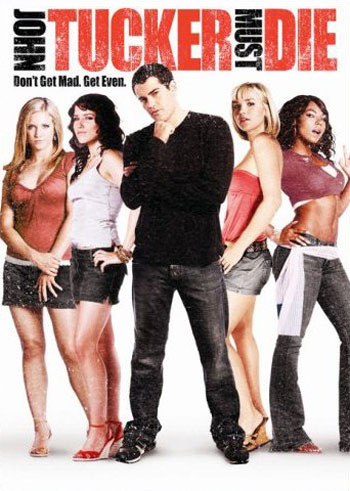
Meet the modern-day Iago: John Tucker. He is high school’s hottest hunk in John Tucker Must Die, a movie that combines comedy with girl-power after John Tucker decides to break the girl code and date three girls at one time. Like Iago, John Tucker is an expert at manipulating those around him, but, also like Iago, he faces retribution at the hands of scorned women. John’s social demise and eventual rebooting is a result of his decision to date three girls at his high school who travel in different social circles. But these girls find out and team up with the new girl to destroy John’s reputation. When the girls discover that they are all dating John Tucker, the new girl, Kate, delivers a line that sets their whole plan in motion: “It seems to me that if a guy treats you like that…I’d get even.” (John Tucker Must Die) After this fateful meeting of the four women, John’s status as the super-jock falters via an instance of raging hormones on the basketball court, an extremely public scene in which John slips into a set of underwear that are about as feminine as undergarments can get, and a movie theater preview proclaiming John’s affliction with an STD.
Despite all of these attempts to destroy John’s social status, he somehow regains his popularity just as Iago does after each scandalous event with the help of his unending confidence and manipulative words. John doesn’t meet his fate until the most eventful birthday of his life thus far when he literally gets cake thrown at his face. (link to witness this highly entertaining food fight: http://movieclips.com/nf4XS-john-tucker-must-die-movie-truth-comes-out/) All of the hits to John’s reputation and his face full of birthday cake prove to John that his actions do indeed have negative consequences and those consequences surface eventually.
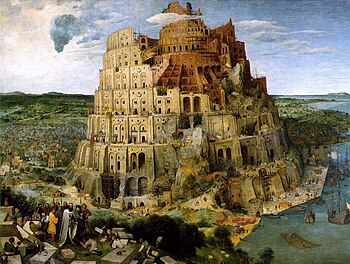
Iago’s and John Tucker’s cocky demeanors surface in the Book of Genesis within the foibles of the Ancient Babylonians. This particular group of people believed that despite their inferiority to God, they could build a tower tall enough to reach Heaven. Their purpose in building this Tower of Babel
Works Cited
Genesis. The New American Bible. Revised ed. New Jersey
John Tucker Must Die. Dir. Betty Thomas. By Jeff Lowell. Perf. Jesse Metcalfe, Brittany Snow, Ashanti
Subscribe to:
Posts (Atom)